
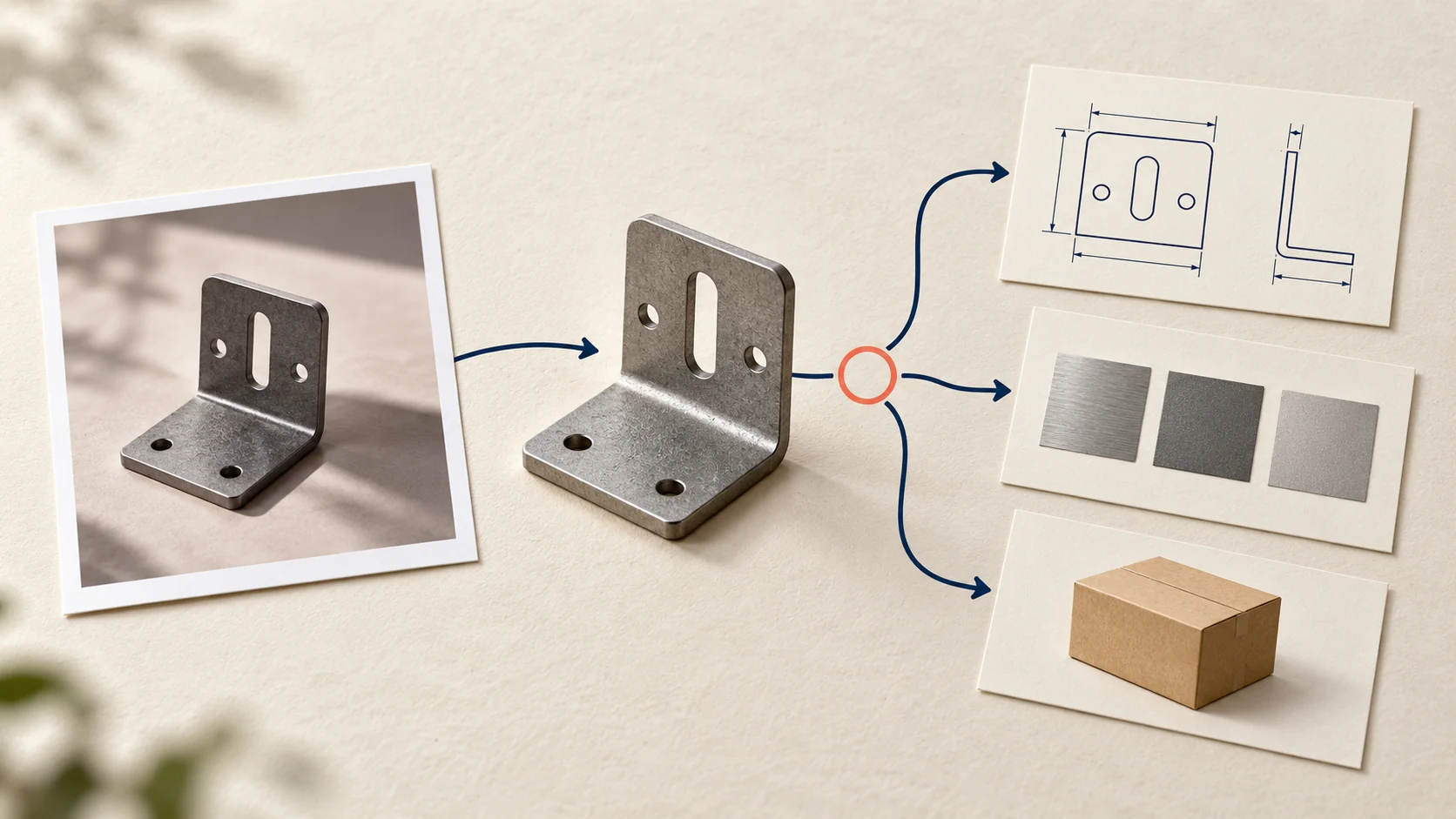
A product photo can start a conversation with a Chinese supplier. It does not establish the material, hidden construction, performance or price. First explain what the picture represents, then give the supplier enough information to identify a possible match or ask the next useful question. The first output should be an inquiry brief, with unknowns visible.
Use this before asking for a comparable firm quotation
The buyer supplies the reference and intended use; the sales contact records the request, and the relevant product or technical person reviews feasibility. The result is a short record of confirmed inputs, assumptions and the next action. This is narrower than a complete product specification sheet or the later task of comparing supplier quotations. It does not identify an actual product or validate a design.
1. Define the role of the image
Tell the supplier whether you want that exact existing model, a visually similar alternative, or a reference for development. Point out which features must match and which may differ. Add a clear overall view and the relevant interfaces where useful. Background objects, filenames and hidden features are not a specification.
Give the reference an identifier and keep it with the current request version. Share only images and documents you are entitled to share; do not upload private customer material to this website.
2. Explain the function and critical dimensions
Describe what the item must do, where it fits and what it connects to. Give the dimensions that control fit, with units, or ask what measurements the technical reviewer needs. If you have a model number, a sample or a drawing, identify what it actually represents.
Leave unverified material, load capacity, temperature rating and electrical characteristics marked as unknown. An appearance match is not evidence of these properties. Ask the responsible specialist about product and destination requirements where relevant; a photograph cannot demonstrate market approval.
3. Make the commercial input specific
| Input | What to clarify | What it does not establish |
|---|---|---|
| Quantity | Sample, trial or production order; pieces, sets or cartons | A forecast is a committed order |
| Configuration | Quantity by model, colour and pack type | The total meets every per-variant MOQ |
| Delivery target | Factory dispatch, shipment or arrival date and an appropriate destination | A confirmed lead time or freight-inclusive price |
On smaller screens, scroll within the table to view all three columns.
Keep the first purchase separate from a possible annual forecast. If the mix is undecided, say so. Use the separate MOQ scope guide for the minimums that apply to the selected variants.
4. Distinguish a conditional indication from an order price
Fictional example: you send a picture of a metal bracket and request 500 pieces. The quantity and visible shape can be recorded, but the material, dimensions, finish, application and packing remain open. Ask which dimensions and use details are needed to identify a candidate model before requesting a price. Do not infer the metal or coating from its colour.
If a supplier can offer an early indication, request the assumptions, included and excluded costs, missing inputs and the point at which the quote must be revised. If there is no sound basis for estimating, gather the missing evidence first. An unknown cost is not zero, and a completed brief is not production approval.
5. Agree the next response
A useful request might say: “This image is an appearance reference for a trial order, not an approved specification. Please tell us whether you have a possible existing model and which dimensions or use details you need to check it. Any early price should identify its assumptions and cost scope.” This is an example, not a supplier response-time promise.
Keep one short record with the image reference, confirmed inputs, open questions, buyer and supplier owners, and the next agreed review. Where no date is agreed, leave it pending. Retain the earlier version when a requirement changes, then use confirmed specifications and a properly scoped quotation for the next commitment.
Source and evidence limits
Alibaba.com’s RFQ guide describes specification, quantity, quality and delivery inputs, and distinguishes information gathering from a price request. It is background guidance checked on 20 October 2026, not a newly announced platform rule. The five checks, request wording and bracket scenario are CZ Overseas methods and a fictional example.
Buyers can now turn a reference image into a brief a supplier can review, identify the missing inputs and avoid treating a visual match or conditional indication as an approved order.
Frequently asked questions
Can I get a price before I have a full drawing?
Ask whether the supplier can give a conditional indication with stated assumptions. Mark unknown dimensions, material, quantity and cost scope. Do not treat that indication as an approved order price.
Must every photo inquiry include an engineering drawing?
No universal document requirement fits every product. Clarify the use, key dimensions, candidate model or sample first, then ask the relevant technical person what additional evidence is needed.
Does asking for the same product as the photo define the specification?
Not by itself. Explain whether you need the same appearance, function, interface or packaging, and agree measurable acceptance criteria where they matter.